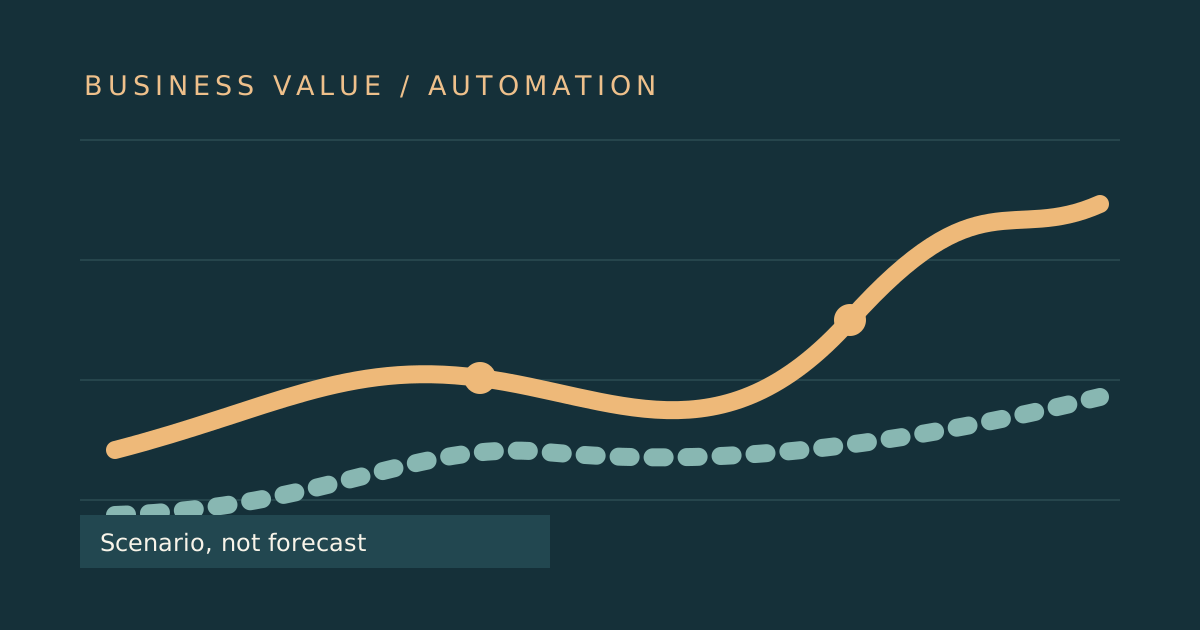
AI exposure cannot be captured by applying one blanket valuation discount to every BPO. Its impact depends on which services are delivered, how clients pay, whether contracts allow repricing and whether the operator can capture productivity gains.
Segment revenue before projecting change
Separate high-volume scripted work, complex human judgment, regulated workflows, technical support and technology-enabled back-office services. Identify the actual share of revenue in each, the contractual pricing model and renewal timelines. Do not label every service "AI-proof" or "obsolete."
Model two scenarios, not one prediction
A downside scenario might assume declining billable agent hours, price compression and re-training costs. An upside scenario might assume automation savings, better quality control and higher-value exception handling. Either scenario requires costed assumptions, not a claim that AI guarantees better margins.
Where valuation risk appears
- Client concentration magnifies the impact of one program switching vendors or tools.
- Per-seat and per-hour contracts may behave differently from outcome-priced contracts.
- Tool licenses and third-party models can add cost, security and data-residency obligations.
- Human oversight and incident handling can remain material even when workflows automate.
- Training, redeployment and redundancy liabilities must be considered.
A serious buyer should ask for program-level revenues, gross margin, staffing model, automation commitments, contract terms and implementation costs, then create a sensitivity model.
Connect the assumptions to enterprise value
Do not insert a generic "AI discount" into the BPO valuation calculator. First develop a sustainable earnings base and reasonable risk-adjusted multiples. Use the buyer checklist and selling guide to organize the evidence.
For a Philippine business, verify workforce and client-data obligations with professional advisers. This article is a decision framework, not a forecast of AI job losses or industry transaction pricing.