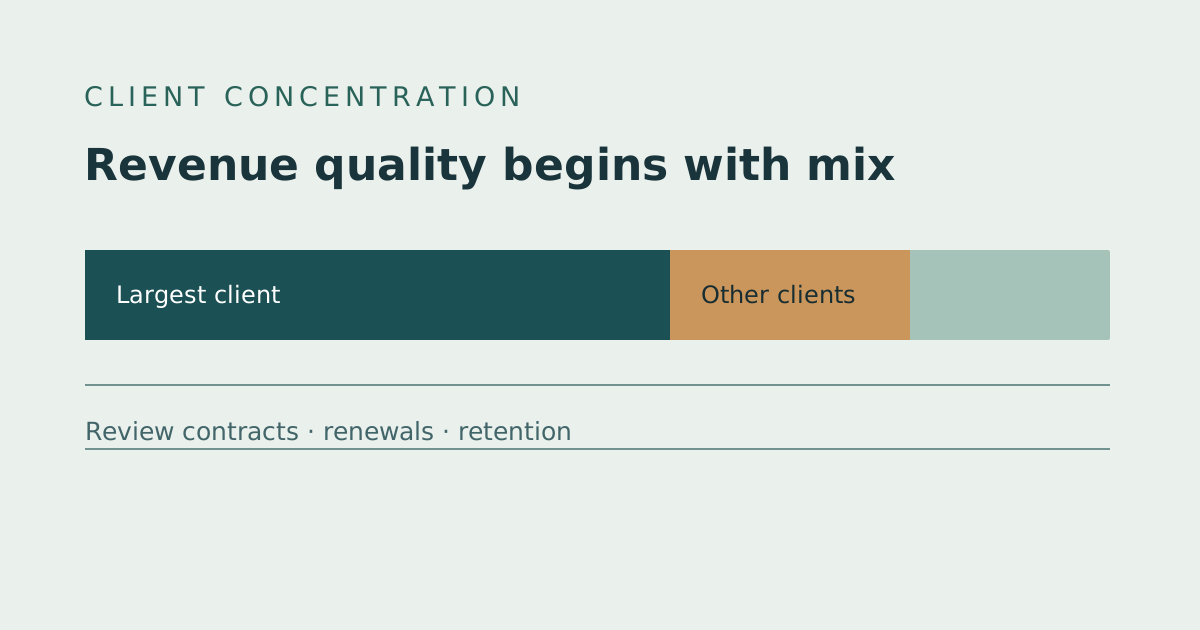
A BPO can report healthy revenue yet remain fragile if one client, one renewal or one delivery manager supports most of its cash generation. Buyers should analyze who pays, why they stay, how profitable the work is and what can change after closing.
Start with a consistent denominator
Calculate each client's percentage of the same trailing-12-month revenue period. Use recognized revenue, not inflated pipeline or bookings. Check geographic concentration, related-party work and service-line concentration separately.
Review the top contracts
For every large account, record: start and expiry dates, renewal mechanics, termination convenience rights, change-of-control clauses, minimum volumes, service level penalties, pricing formulas, billing currency and data-security requirements. Obtain counsel's interpretation rather than assuming every contract transfers.
Look beyond annual sales
Compare monthly billed amounts, cash collected, aged receivables, gross margin, seasonality, churn, credit notes and disputed invoices. A big client may have lower quality earnings than several smaller retained customers.
Ask what survives the transaction
Interview management about client relationship ownership, key employee dependence, contact points, service-transition commitments and buyer-side customer consent where relevant. Preserve confidentiality and avoid contacting clients without agreement.
Turn analysis into a decision
Document concentrations, renewal dates, contract restrictions and sensitivity to a lost major customer. Then revisit assumptions in the valuation model and check the broader acquisition due-diligence list.
A seller can use the readiness worksheet to collect the same materials before approaching buyers.