Closing the sale is not the end of the transaction. The buyer still has to turn legal ownership into practical control of the company, its accounts and its operations.
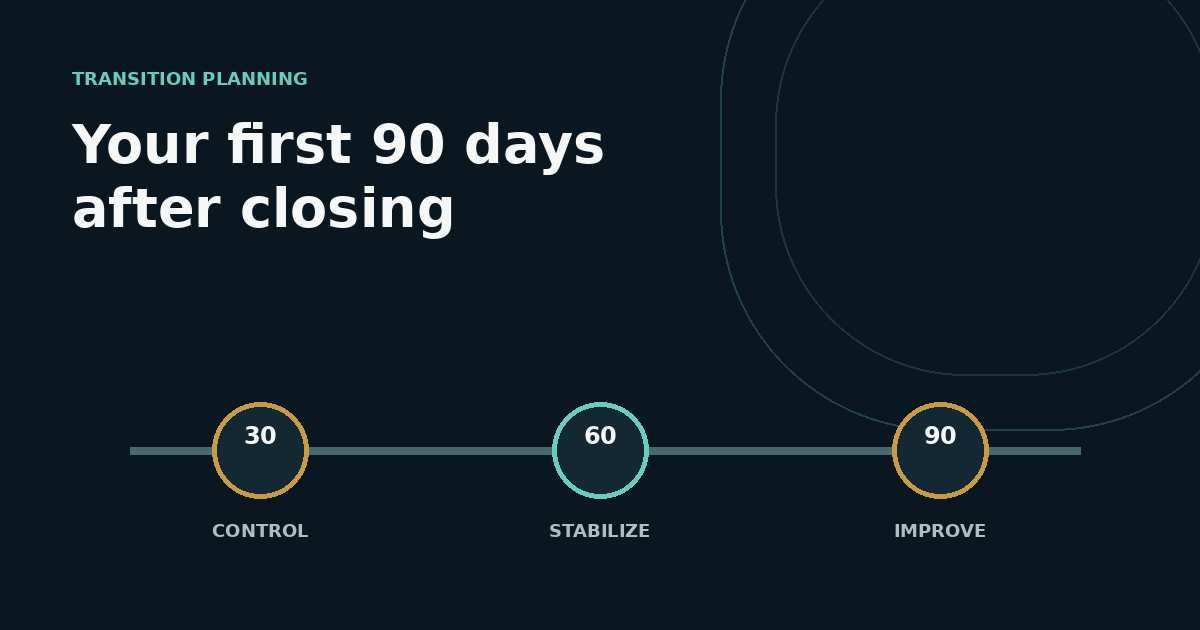
A simple 30/60/90-day plan helps prevent important handover work from being buried under day-to-day tasks.
Before day one: prepare the handover list
Do not wait until after closing to discover what needs to move. The buyer and seller should already have a schedule covering:
- corporate records and authority;
- bank administration;
- SBMA and other regulatory matters;
- domains and DNS;
- email and cloud accounts;
- website source and deployment access;
- contracts and subscriptions;
- office access and utilities;
- employees and contractors, if applicable;
- keys, devices, recovery codes and other credentials.
The guide to what actually transfers in a BPO company sale is a useful checklist before closing.
First 30 days: establish control and visibility
The first month is about making sure the buyer can see and control what it now owns.
Priorities usually include:
Corporate control
Update the stock and corporate records, directors and officers as required. Make the necessary SEC, beneficial-ownership and other filings with professional assistance.
Banking
Complete the bank's KYC, beneficial-owner and signatory requirements. Confirm who can approve payments and who has online access.
See Corporate Banking After a Company Sale: What a Buyer Should Plan For for the banking workstream.
Digital security
Take control of domains, DNS, email, cloud platforms, repositories and administrator accounts. Rotate important passwords, recovery codes and MFA methods. Remove obsolete access.
For the current sale, the webshop.ph digital-assets page identifies the domain and website items that should be included in this handover.
Regulatory status
Notify or update SBMA and other authorities as required by the sale structure, ownership changes and future business activity.
Days 31–60: stabilize the operating base
Once control is clear, verify that the company can operate reliably under the new ownership.
Review:
- bank and payment workflows;
- recurring bills and contracts;
- tax and filing calendar;
- office and utility arrangements;
- internet and backup connectivity;
- insurance;
- data-retention and privacy obligations;
- service providers and professional advisers;
- any employee or contractor transitions.
If the buyer will continue operating from Subic, this is also the right period to confirm the longer-term office plan and SBMA requirements. See Subic Bay Office and Local Operating Base.
Days 61–90: improve rather than merely preserve
By the third month, the buyer should have enough visibility to decide what should remain and what should change.
Possible improvements include:
- simplifying the account and software stack;
- improving cybersecurity and backups;
- changing vendors;
- consolidating domains and cloud services;
- introducing better financial reporting;
- updating the website and sales positioning;
- hiring or restructuring the team;
- expanding or relocating the office;
- aligning SBMA registrations with the future operating model.
The goal is not to preserve every inherited process. It is to keep what works long enough to replace it deliberately.
Keep a transition log
Track open items, owners, due dates, credentials moved, third-party approvals and documents received. This is especially useful when the seller remains available for a limited transition period.
The 90-day objective
At the end of the first 90 days, the buyer should be able to answer four questions clearly:
- Who legally controls the company?
- Who controls every important bank and digital account?
- Which regulatory and contractual obligations remain open?
- What operating model will the company use going forward?
The stronger the pre-closing due diligence, the easier this transition becomes.
Official and industry resources
- SBMA business registrationOfficial Subic Bay Freeport registration reference for ownership and operating changes.